> ## Documentation Index
> Fetch the complete documentation index at: https://docs.peektag.com/llms.txt
> Use this file to discover all available pages before exploring further.
# Knowledge Sources
> Add files and business information the experience agent can use to answer more accurately.
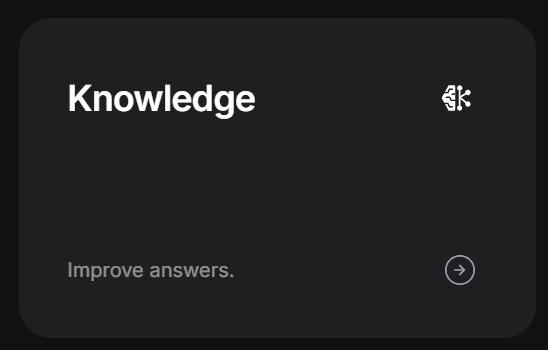 Knowledge Sources are extra information you give to the experience agent.
Use this section when you want the agent to answer with more context, more accuracy, and fewer guesses.
In simple words: this is where the designer can add useful brand or business information so the agent knows what it is talking about.
## What can you add here?
You can add information that helps the agent understand the business, the customer, the product, or the topic of the experience.
Examples:
* Menu details for a restaurant
* Dietary information, allergens, calories, or vegan options
* Diet and nutrition notes for a wellness experience
* Brand style guide or tone of voice
* Product descriptions and size information
* Fashion trends, outfit rules, seasonal styles, or styling tips
* Beauty service descriptions and aftercare notes
* Interior design trends, color palettes, decoration styles, or material guides
* Hotel, venue, or event information
* FAQs, policies, return rules, booking rules, or delivery details
Add anything the agent should know before answering customers. If the information matters for the customer experience, it probably belongs here.
## Add files
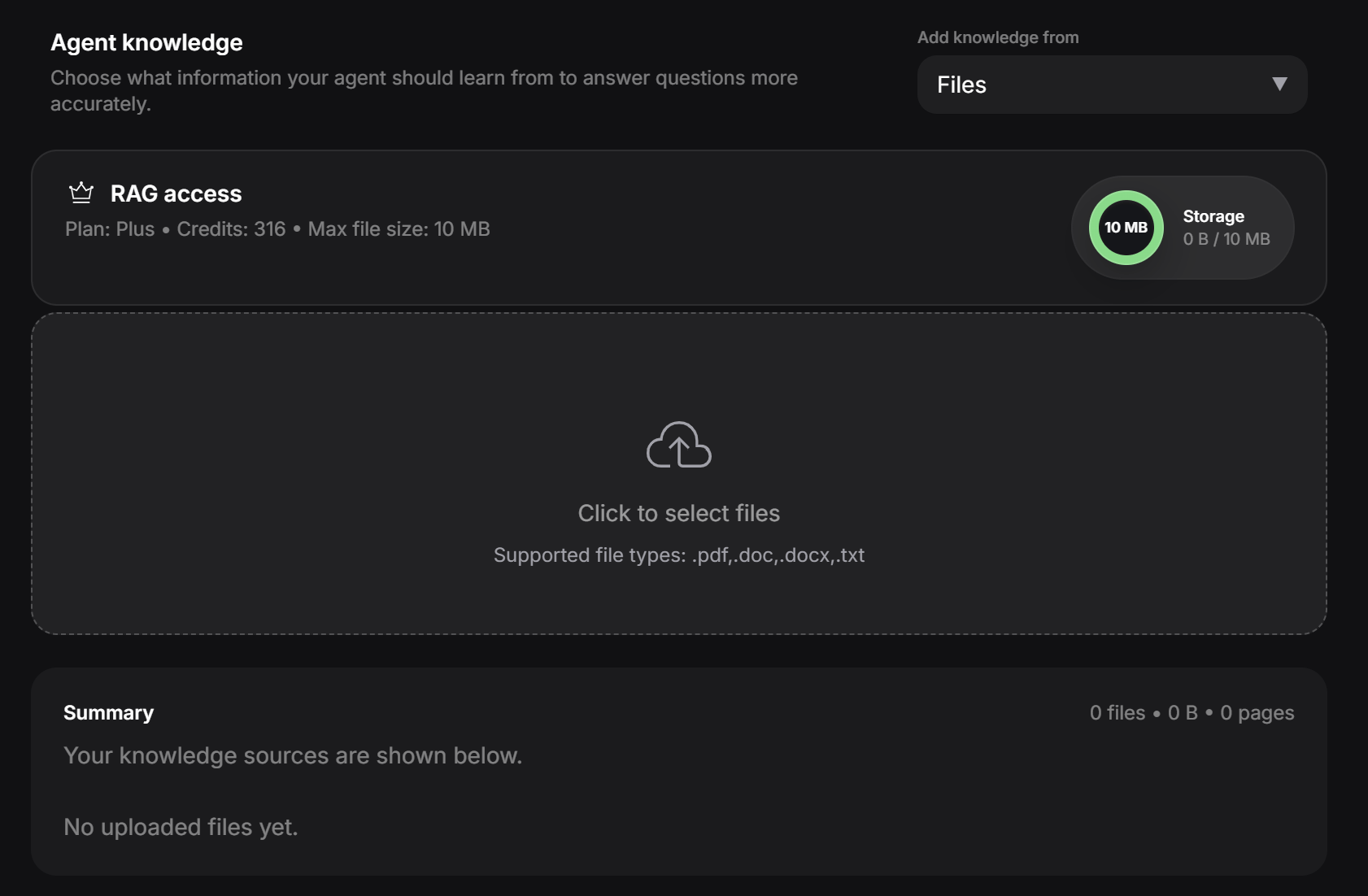
Use **Files** when you already have a document ready.
This can be a PDF, DOC, DOCX, or TXT file. For example, a brand guide, a menu, a product catalog, a service list, a policy document, or a client brief.
Knowledge Sources are extra information you give to the experience agent.
Use this section when you want the agent to answer with more context, more accuracy, and fewer guesses.
In simple words: this is where the designer can add useful brand or business information so the agent knows what it is talking about.
## What can you add here?
You can add information that helps the agent understand the business, the customer, the product, or the topic of the experience.
Examples:
* Menu details for a restaurant
* Dietary information, allergens, calories, or vegan options
* Diet and nutrition notes for a wellness experience
* Brand style guide or tone of voice
* Product descriptions and size information
* Fashion trends, outfit rules, seasonal styles, or styling tips
* Beauty service descriptions and aftercare notes
* Interior design trends, color palettes, decoration styles, or material guides
* Hotel, venue, or event information
* FAQs, policies, return rules, booking rules, or delivery details
Add anything the agent should know before answering customers. If the information matters for the customer experience, it probably belongs here.
## Add files
Use **Files** when you already have a document ready.
This can be a PDF, DOC, DOCX, or TXT file. For example, a brand guide, a menu, a product catalog, a service list, a policy document, or a client brief.
 Good file examples:
* `restaurant-menu.pdf`
* `brand-guidelines.docx`
* `outfit-style-notes.txt`
* `salon-services.pdf`
* `interior-design-trends.docx`
* `diet-and-allergen-info.pdf`
Keep files clean and up to date. If you upload old information, the agent may use old information in its answers.
## Add a website
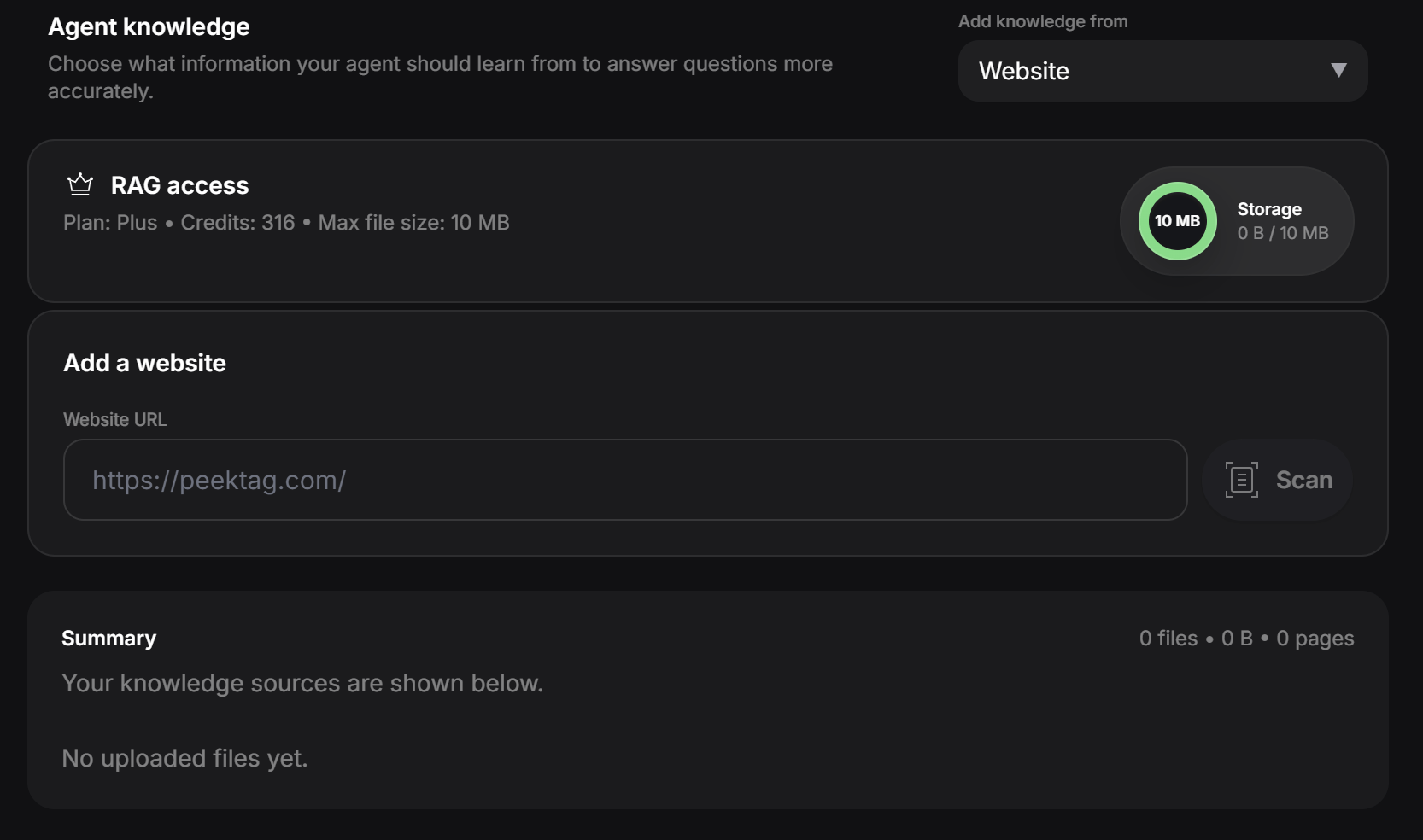
Use **Website** when the information already exists online.
The designer can paste a website URL and let PeekTag scan the page. This is useful when the agent needs context from an article, a help page, a product page, a Wikipedia page, or another trusted source.
Good file examples:
* `restaurant-menu.pdf`
* `brand-guidelines.docx`
* `outfit-style-notes.txt`
* `salon-services.pdf`
* `interior-design-trends.docx`
* `diet-and-allergen-info.pdf`
Keep files clean and up to date. If you upload old information, the agent may use old information in its answers.
## Add a website
Use **Website** when the information already exists online.
The designer can paste a website URL and let PeekTag scan the page. This is useful when the agent needs context from an article, a help page, a product page, a Wikipedia page, or another trusted source.
 Examples:
* A Wikipedia article about a fashion style or design movement
* A brand page that explains product materials
* A restaurant website with menu information
* A blog post about current fashion trends
* An article about Mediterranean diet basics
* A page about interior design trends
* A support page with policies or FAQs
Only add websites that are useful for the experience. A good source helps the agent answer better. A random source can confuse it.
## Add text snippets
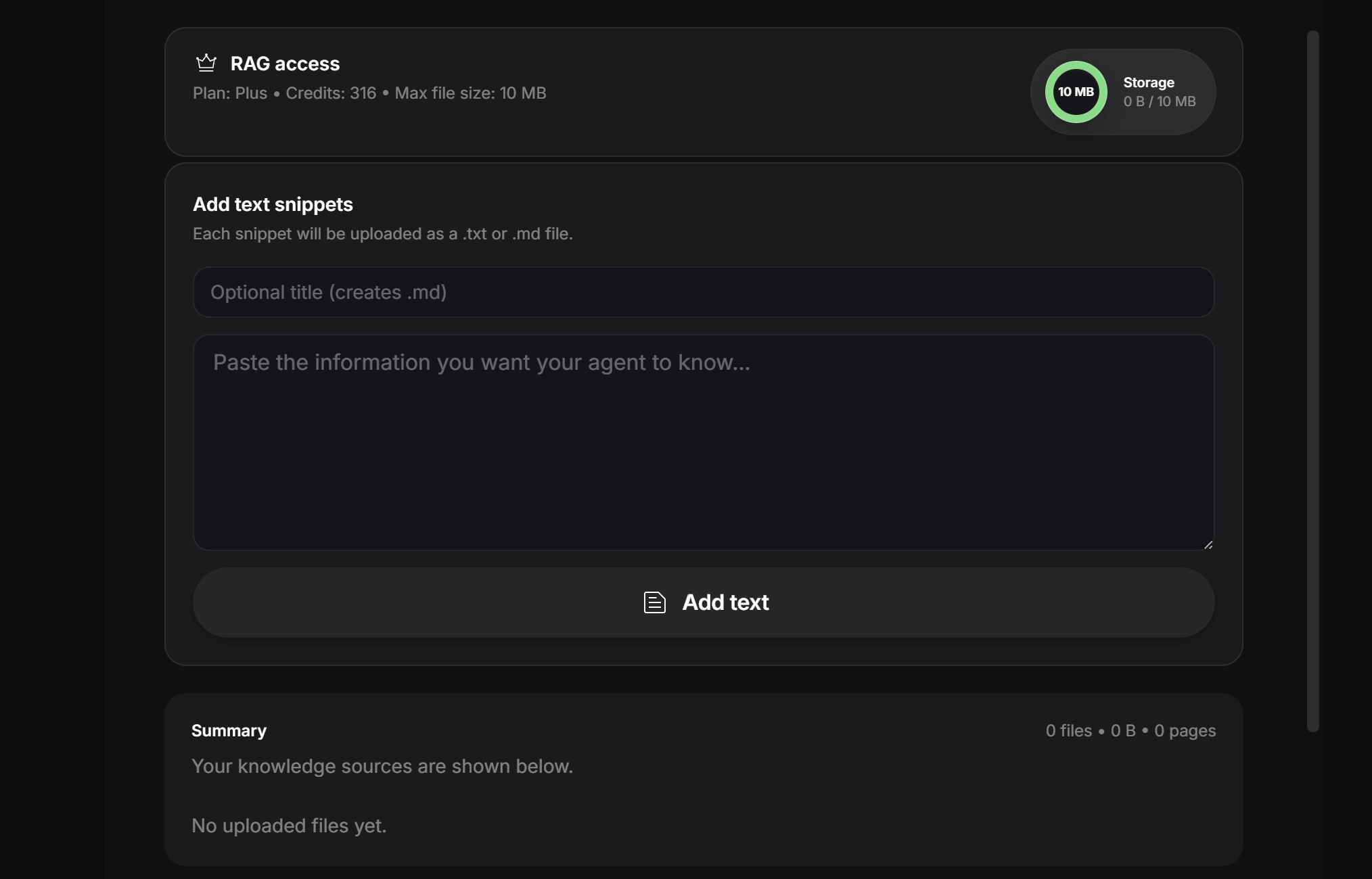
Use **Text snippets** when you just want to paste your own notes.
This is useful when the designer has information that is not in a file or website yet. You can paste plain text, notes, or Markdown content, and PeekTag will save it as a knowledge source for the agent.
Examples:
* A Wikipedia article about a fashion style or design movement
* A brand page that explains product materials
* A restaurant website with menu information
* A blog post about current fashion trends
* An article about Mediterranean diet basics
* A page about interior design trends
* A support page with policies or FAQs
Only add websites that are useful for the experience. A good source helps the agent answer better. A random source can confuse it.
## Add text snippets
Use **Text snippets** when you just want to paste your own notes.
This is useful when the designer has information that is not in a file or website yet. You can paste plain text, notes, or Markdown content, and PeekTag will save it as a knowledge source for the agent.
 Good text snippet examples:
```text theme={null}
For this outfit experience, keep the tone premium and simple. Focus on neutral colors, soft textures, and practical styling advice. Do not mention prices unless they are provided by the client.
```
```text theme={null}
The restaurant has vegetarian, vegan, and gluten-free options. If a guest asks about allergies, tell them to confirm with the restaurant staff before ordering.
```
```text theme={null}
This interior design experience should focus on warm minimalism, natural materials, soft lighting, and small-space decoration ideas.
```
## After adding knowledge
After you add or update knowledge sources, train the agent again.
If you add a file, scan a website, or paste new text, click **Train** after that. Training helps the agent use the latest knowledge in future answers.
## Best practices
* Add only useful and relevant information.
* Remove old files when they are no longer correct.
* Avoid adding duplicate information in many places.
* Use trusted websites when scanning online content.
* Keep sensitive or private information out unless it is safe to use.
* Train the agent after every important knowledge update.
Configure how the agent guides users through the conversation.
Good text snippet examples:
```text theme={null}
For this outfit experience, keep the tone premium and simple. Focus on neutral colors, soft textures, and practical styling advice. Do not mention prices unless they are provided by the client.
```
```text theme={null}
The restaurant has vegetarian, vegan, and gluten-free options. If a guest asks about allergies, tell them to confirm with the restaurant staff before ordering.
```
```text theme={null}
This interior design experience should focus on warm minimalism, natural materials, soft lighting, and small-space decoration ideas.
```
## After adding knowledge
After you add or update knowledge sources, train the agent again.
If you add a file, scan a website, or paste new text, click **Train** after that. Training helps the agent use the latest knowledge in future answers.
## Best practices
* Add only useful and relevant information.
* Remove old files when they are no longer correct.
* Avoid adding duplicate information in many places.
* Use trusted websites when scanning online content.
* Keep sensitive or private information out unless it is safe to use.
* Train the agent after every important knowledge update.
Configure how the agent guides users through the conversation.