> ## Documentation Index
> Fetch the complete documentation index at: https://docs.peektag.com/llms.txt
> Use this file to discover all available pages before exploring further.
# Container
> Add existing tags to a container by selecting from your own tags or from incoming pin requests.
Use **Container** when you want to collect other tags inside one place.
In simple terms, this is a way to group related tags together so the designer can build a richer experience without creating everything from scratch again.
A container is useful when one experience should bring together multiple smaller tags, for example:
* a showcase page that includes several related product tags
* a campaign that groups multiple experiences in one place
* a shopping or styling flow that should surface more than one tag
* a featured section where approved tags are gathered together
## Two simple ways to add tags
The designer can add tags in two easy ways:
* from **My tags**
* from **Pin requests**
This keeps the workflow simple. If the tag already belongs to the owner, it can be selected directly. If another tag requested to be pinned, the designer can review it and include it from the second tab.
 ## My tags
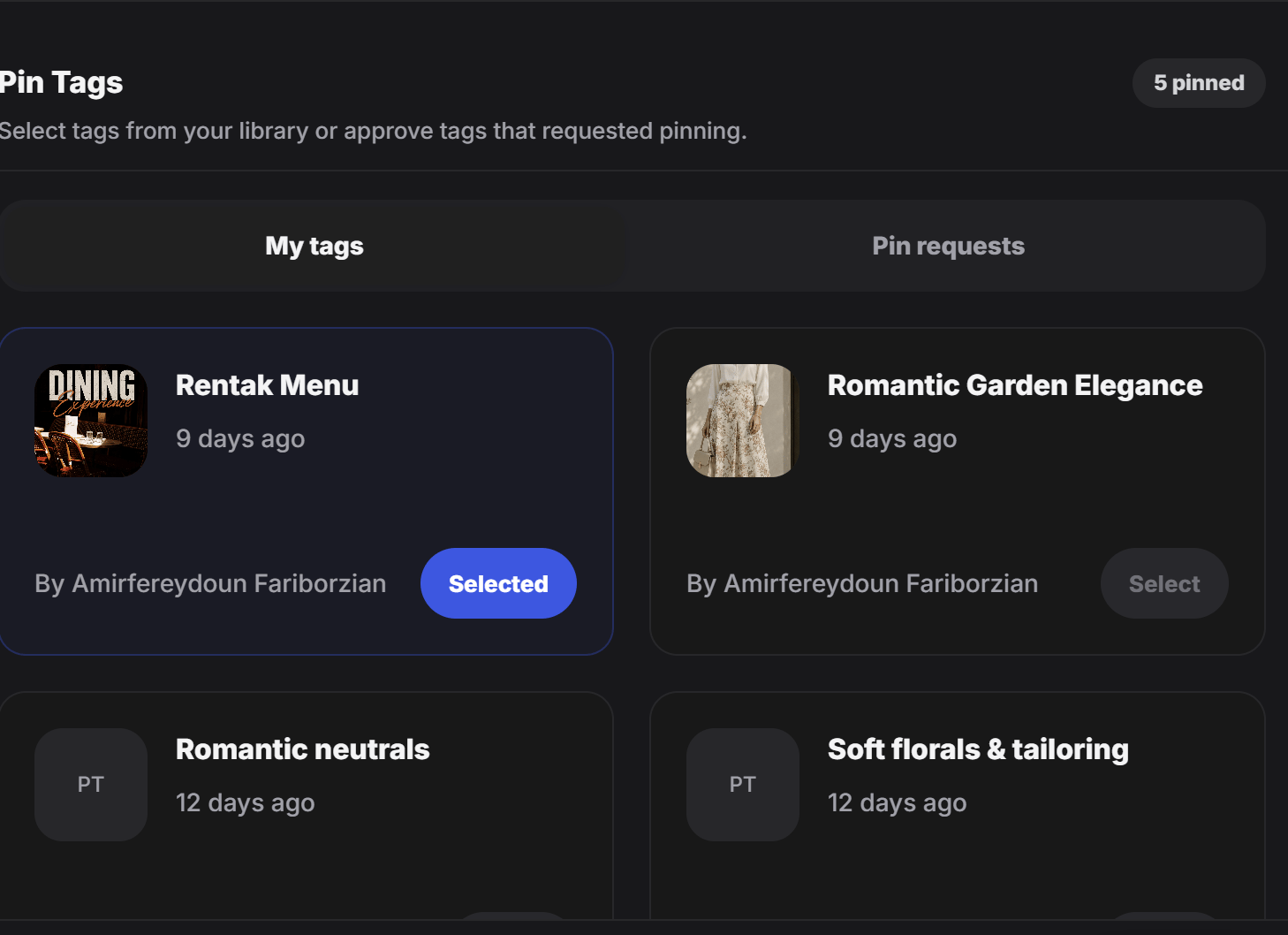
In the **My tags** tab, the designer can browse tags that already belong to the tag owner.
This is the fastest option when the content is already in the owner's library and just needs to be added into the container.
For example, the designer may want to:
* add several product tags into one shopping experience
* combine a menu tag with a booking tag
* group multiple room, outfit, or style tags in one collection
* reuse tags that were already created earlier
The flow is simple:
1. Open **My tags**
2. Find the tag you want
3. Click **Select**
4. Add it into the container
## Pin requests
In the **Pin requests** tab, the designer can review tags that asked to be pinned.
This is useful when other people or other tag owners want their tags to appear inside this experience.
Instead of rebuilding that content manually, the designer can approve and include it directly from the request list.
Typical examples:
* a partner brand wants its tag to appear in a shared experience
* a seller wants one of their products included in a mapped scene
* another creator wants to connect their tag into the container flow
This helps the designer manage collaboration in a clean and organized way.
## My tags
In the **My tags** tab, the designer can browse tags that already belong to the tag owner.
This is the fastest option when the content is already in the owner's library and just needs to be added into the container.
For example, the designer may want to:
* add several product tags into one shopping experience
* combine a menu tag with a booking tag
* group multiple room, outfit, or style tags in one collection
* reuse tags that were already created earlier
The flow is simple:
1. Open **My tags**
2. Find the tag you want
3. Click **Select**
4. Add it into the container
## Pin requests
In the **Pin requests** tab, the designer can review tags that asked to be pinned.
This is useful when other people or other tag owners want their tags to appear inside this experience.
Instead of rebuilding that content manually, the designer can approve and include it directly from the request list.
Typical examples:
* a partner brand wants its tag to appear in a shared experience
* a seller wants one of their products included in a mapped scene
* another creator wants to connect their tag into the container flow
This helps the designer manage collaboration in a clean and organized way.
 ## Why Container is useful
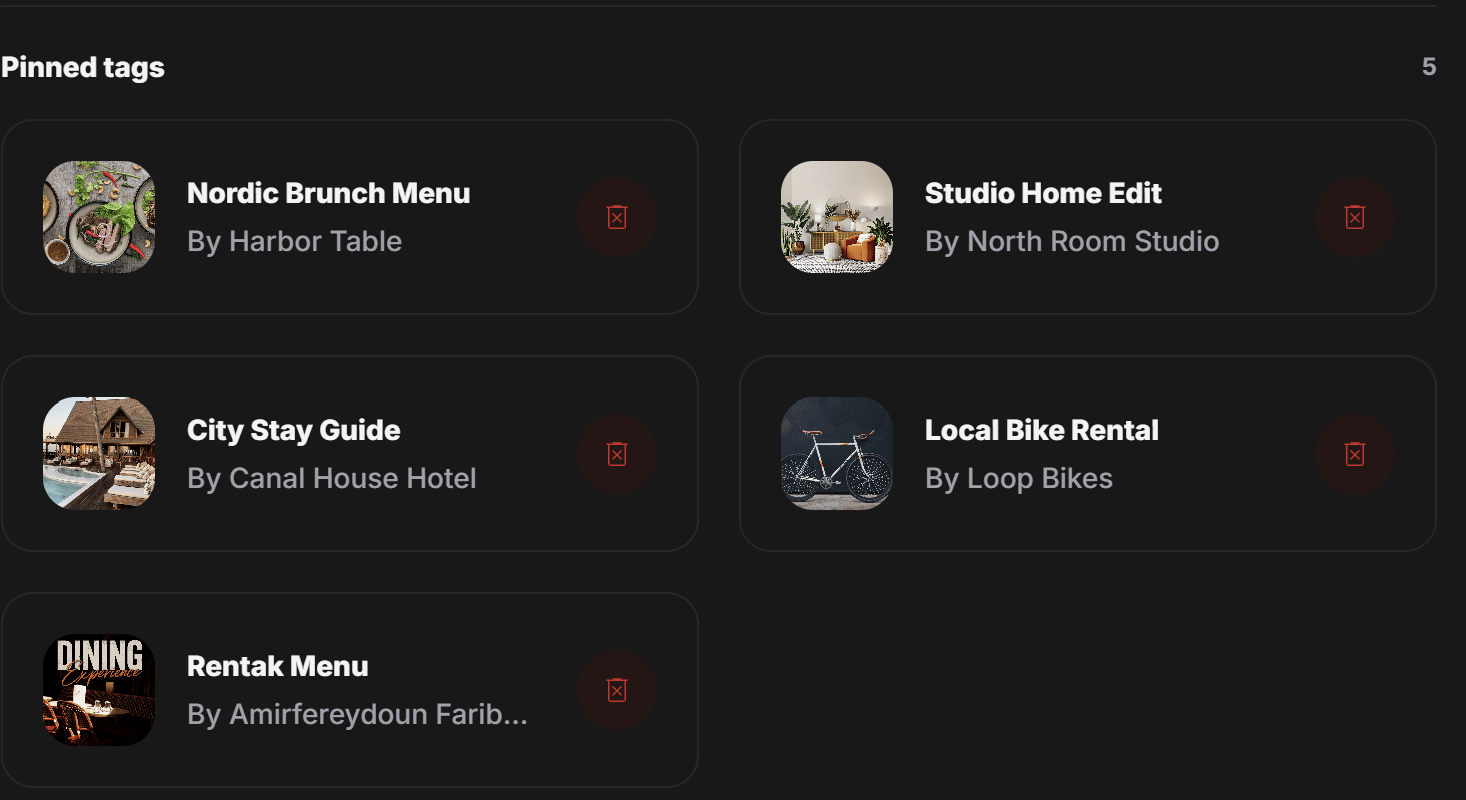
Container works best when the goal is not to write brand-new content, but to bring together tags that already exist.
That means the designer can build faster, stay organized, and reuse good content instead of repeating the same work.
If the experience needs to gather several related tags in one place, **Container** is usually the right tool.
## Why Container is useful
Container works best when the goal is not to write brand-new content, but to bring together tags that already exist.
That means the designer can build faster, stay organized, and reuse good content instead of repeating the same work.
If the experience needs to gather several related tags in one place, **Container** is usually the right tool.